Either way you end up talking to the same crew. This just decides what we put in front of you first — and the storm line is (512) 555-0142 whichever you pick.
The right cut, in the right month, on a tree worth keeping.Nobody goes under it. Then you call.
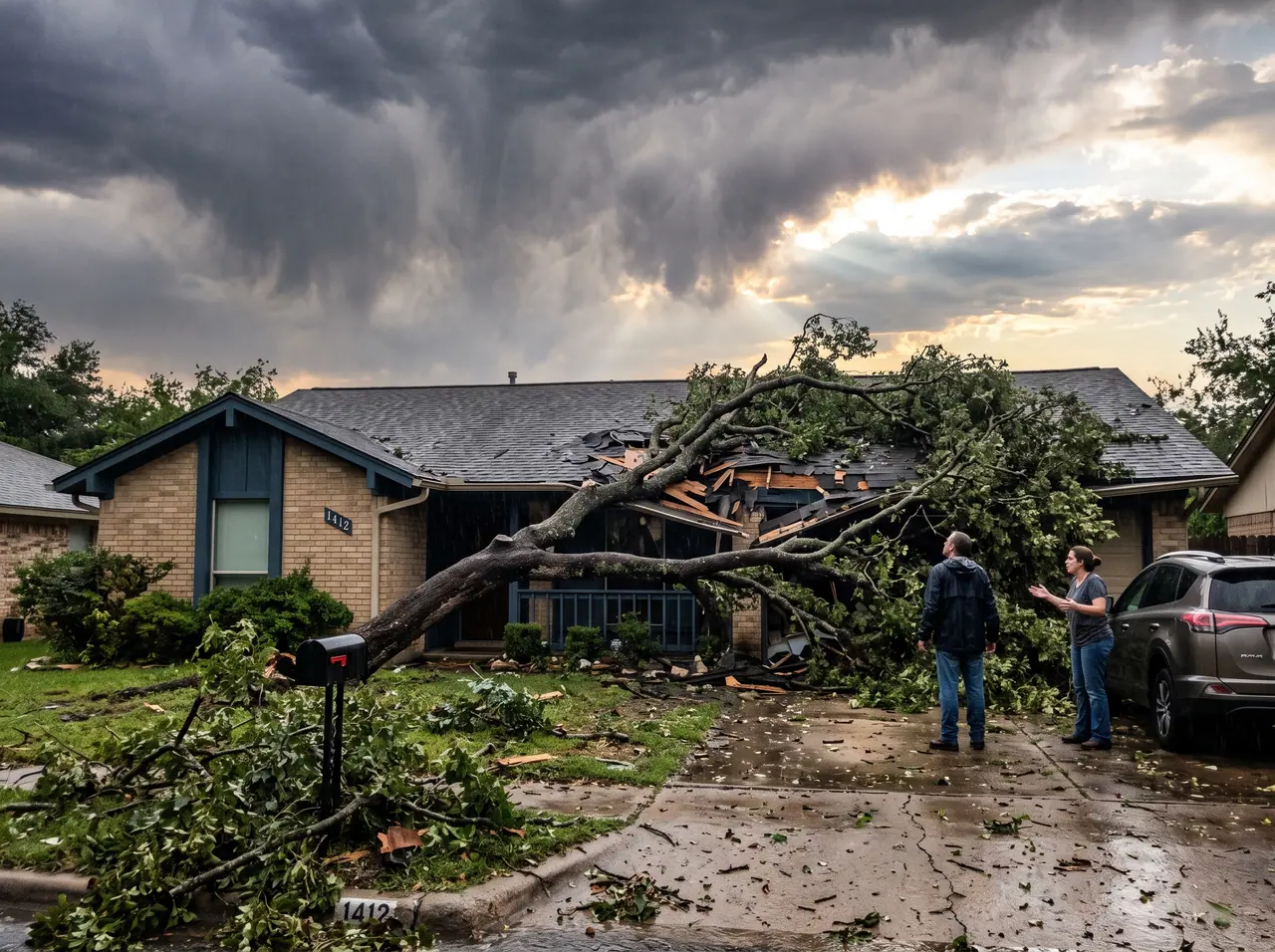
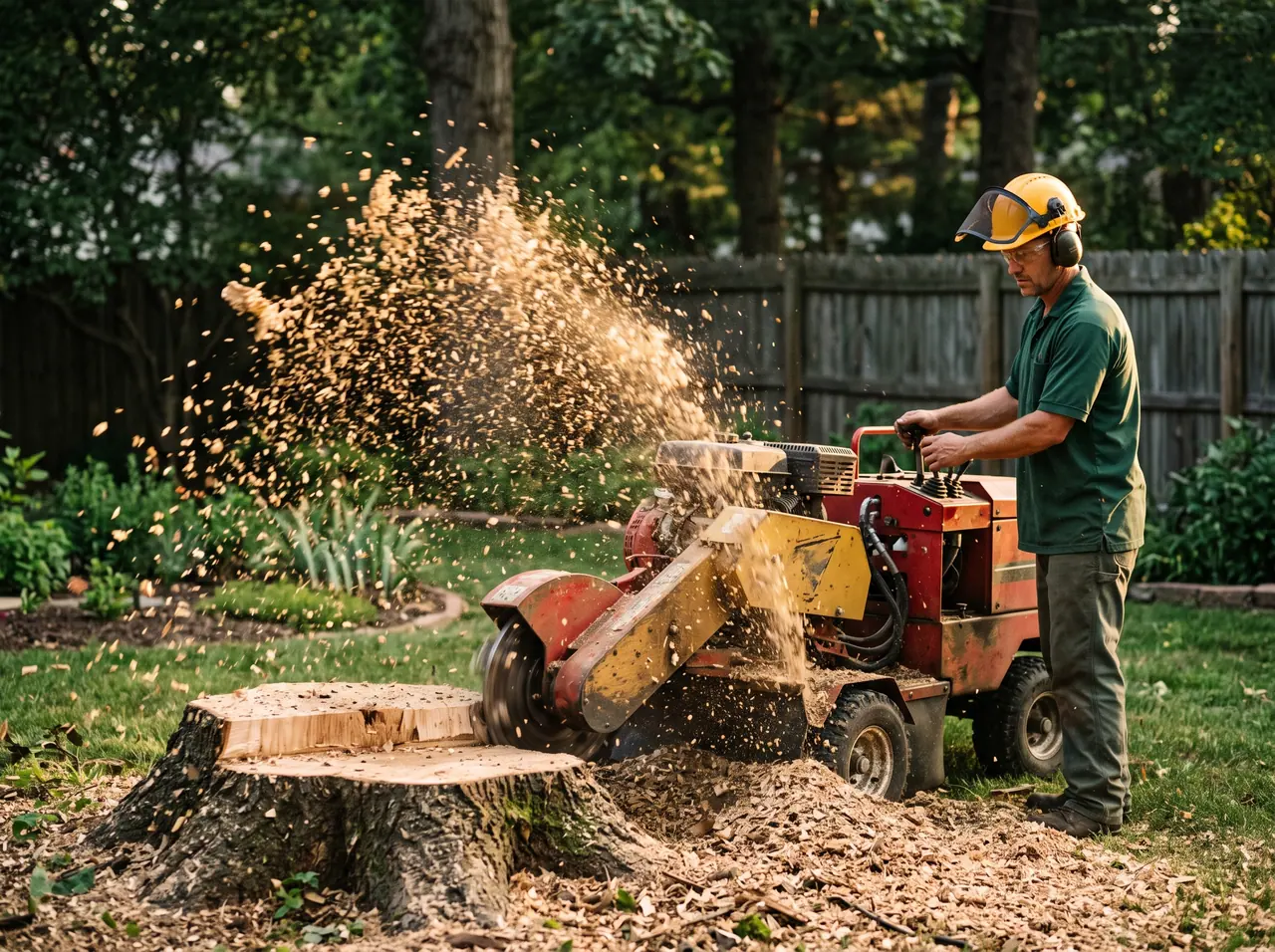
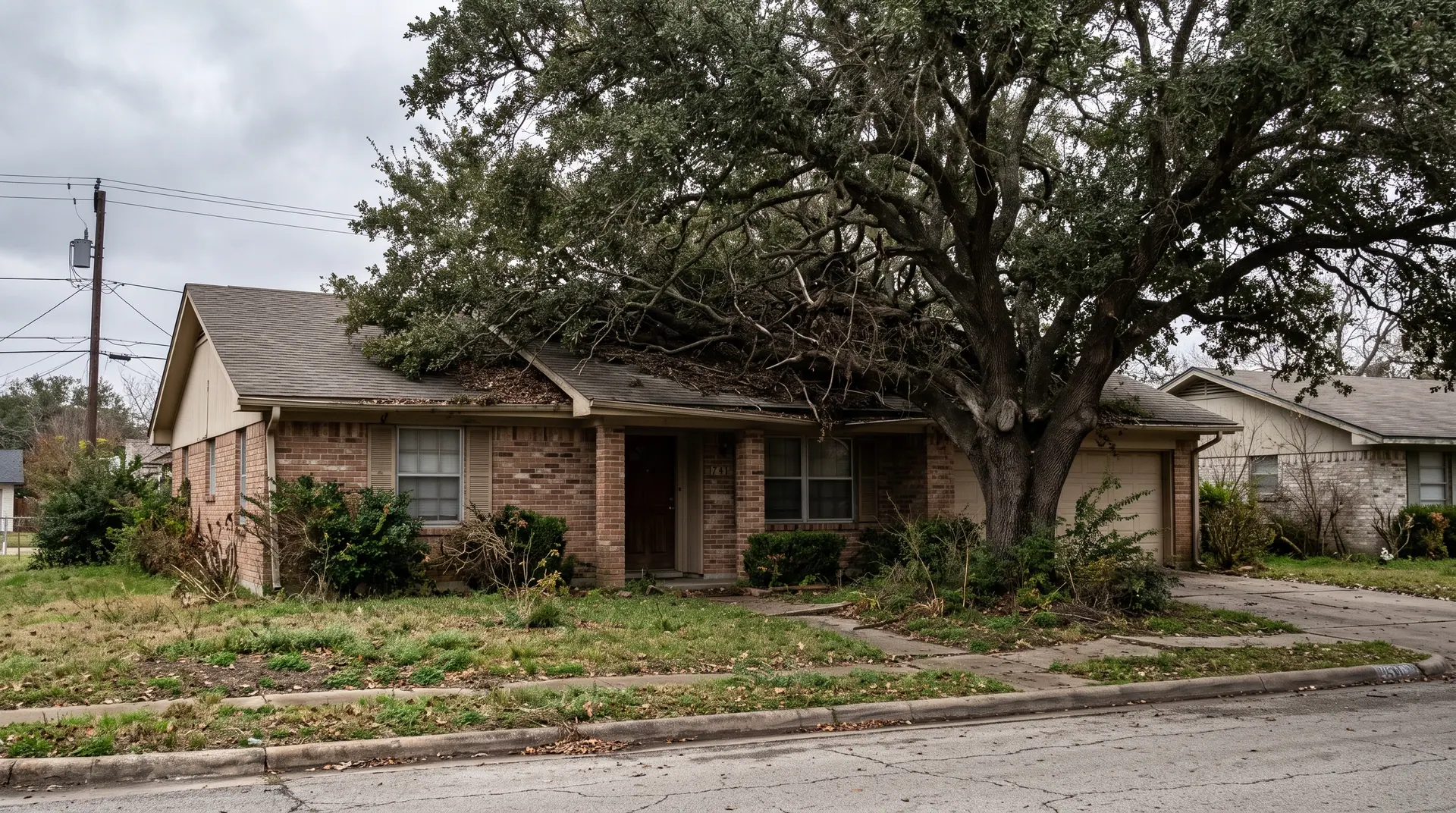
Pruning, removal, stump grinding, oak wilt and storm work across Greater Austin. Climbers on rope rather than spikes, a written scope naming every tree, and a standing refusal to top anything.Get everyone clear, treat every wire as live, and do not pull or cut anything yourself. Then call the storm line and tell us what is touching what.
Either way you end up talking to the same crew. This just decides what we put in front of you first — and the storm line is (512) 555-0142 whichever you pick.
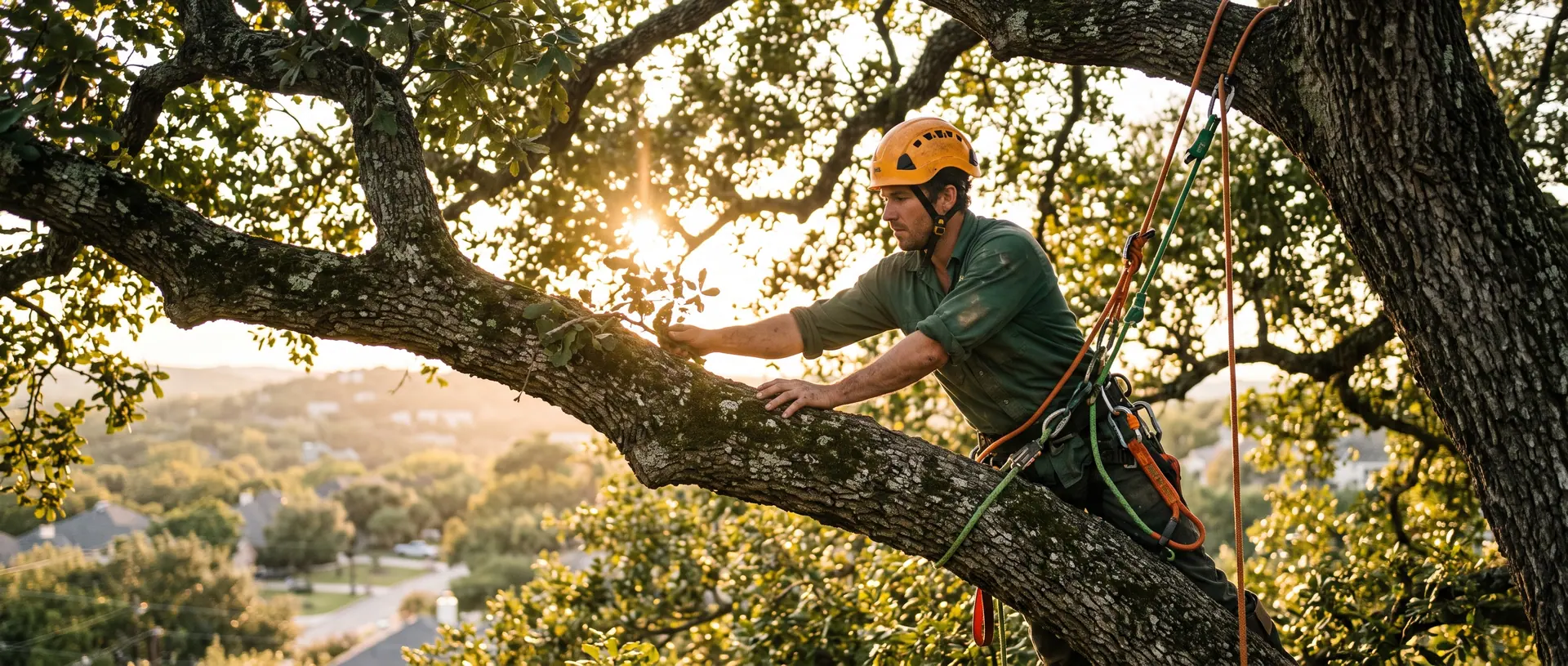
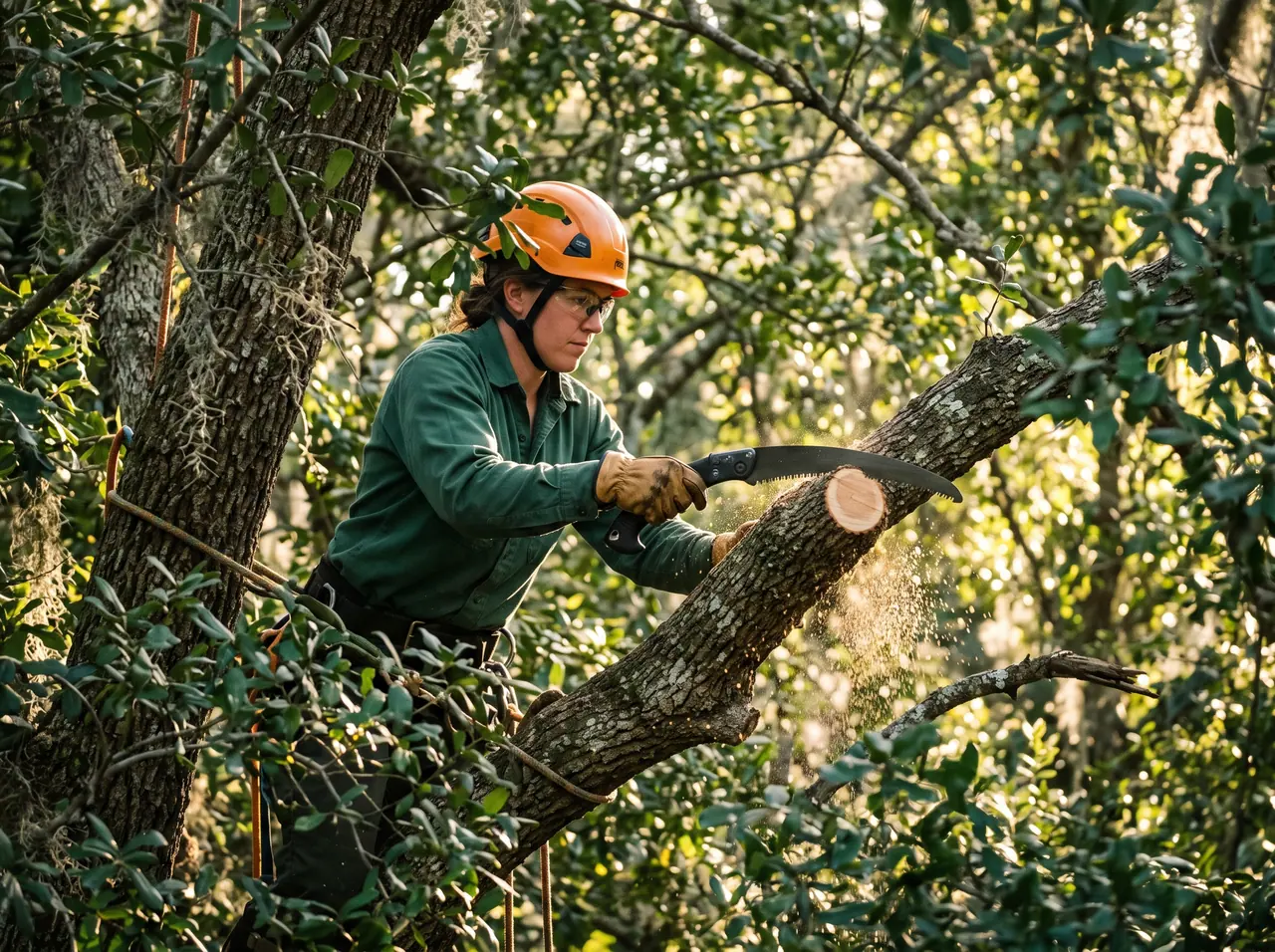
A climber works from above.A bucket reaches in blind; a rope reaches the cut.
Before you call, and before you touch it
Five things, in this order
Most storm injuries happen to homeowners, not crews, and almost all of them happen in the first hour. None of this takes long.
01Get everyone out from under itIncluding the rooms below. A limb that is resting is still loaded, and loaded wood moves without warning.
02Treat every wire as liveIf anything is touching a line, or you cannot tell, stay back the length of the tree and call the utility before you call us.
03Do not pull, cut or climbTension in a fallen limb releases in one direction, fast. Chainsaw injuries after storms overwhelmingly happen to homeowners, not crews.
04Photograph it from a safe distanceWide shots and close shots, before anything is moved. Your insurer will ask, and the answer is much easier now than later.
05Then callA crew member picks up. Tell us what is touching what, whether anyone is hurt and whether the house is occupied.
Four numbers about Central Texas trees — none of them about us
19"
Trunk diameter at which the City of Austin protects a tree, measured 4.5ft above grade
24"
Diameter at which a qualifying species becomes a Heritage tree and needs a full permit
90%
Share of local oak wilt spread that travels underground through grafted live oak roots
25%
Most of a live crown that should ever be removed in a single growing season
What we do
Everything a Central Texas tree is likely to need
Ten services, all worked to ANSI A300 by climbers on rope rather than spikes. Every job is scoped in writing, tree by tree, before anyone starts a saw.
Never prune an oak in Austin between February and June
Sap-feeding beetles carry oak wilt from tree to tree, and they are drawn to fresh cuts. Roughly 90% of local spread is underground through grafted roots, but the above-ground route starts with a wound made at the wrong time of year. This dial is the whole rule.
July to January Prune freely. This is the window.
February to June Oaks only. Emergencies only. Paint immediately.
The rule applies to oaks. Cedar elm, pecan, crepe myrtle, Ashe juniper and everything else in a Central Texas yard can be worked at any time of year.
Pick a month on the dial
Every month carries its own answer. The current month is marked in the hub, and each segment is a button — hover, tap or tab to it.
One live oak, one day
What structural pruning actually looks like
A neglected live oak in Hyde Park with the crown pressing on the roofline and nothing growing underneath it. Crown raised, deadwood out, structure reduced to suitable laterals. Roughly 18% of the live crown came off — well inside the 25% ceiling.
Before
After
Before you book a removal
Find out whether your tree is protected
Put a tape measure around the trunk at four and a half feet above the ground and read off the inches. That is all this needs. Inside Austin city limits, the number it gives back decides whether the tree can be touched without the City's approval — and removing a protected tree without it carries fines running into thousands.
72in around
22.9in across
Protected tree
At 19 inches or more the City of Austin protects this tree. Removal needs an approved permit, and a written arborist assessment is usually part of the application.
Thresholds are the City of Austin's. Williamson and Hays County jurisdictions are generally less restrictive, Georgetown runs its own ordinance, and an HOA covenant can be stricter than any of them. We measure your specific tree and check your specific address before quoting.
24" Heritage19" ProtectedYour tree
Drag the slider · move the pointer to tilt
How it works
Four steps, and nothing agreed on a handshake
The same process on every job, whether it is one crepe myrtle or fourteen live oaks. You always know what is happening next, and nothing appears on an invoice that was not in the scope.
01
Call or request online
Tell us what you are looking at. If it is an emergency we dispatch straight away. If not, we book a free on-site visit, usually within two to three days.
02
Walk the property together
An arborist inspects each tree with you, explains what it actually needs, and tells you plainly if the answer is that it needs nothing.
03
Get it in writing
A written scope listing every tree and the specific work planned on it. Nothing is agreed on a handshake, and nothing changes unless you approve the change first.
04
We work and clean up
The crew arrives when we said, works to ANSI A300 standards, hauls everything away and walks the finished job with you before the truck leaves.
Where we work
Ten cities, and they are genuinely different
Greater Austin and the surrounding suburbs, with no travel surcharge anywhere in the service area. Each city page covers the local soil, the local species and the local permit rules, because thin caliche over limestone in Lakeway and expansive Blackland clay in Pflugerville are not the same problem.
These are illustrative of the kind of work and the kind of decision, written up as a crew note. This is a demonstration site: it publishes no reviews, no ratings and no customer names, because it has no customers.
Tree RemovalTravis Heights, AustinJune
Dead pecan standing six feet from a bedroom wall.
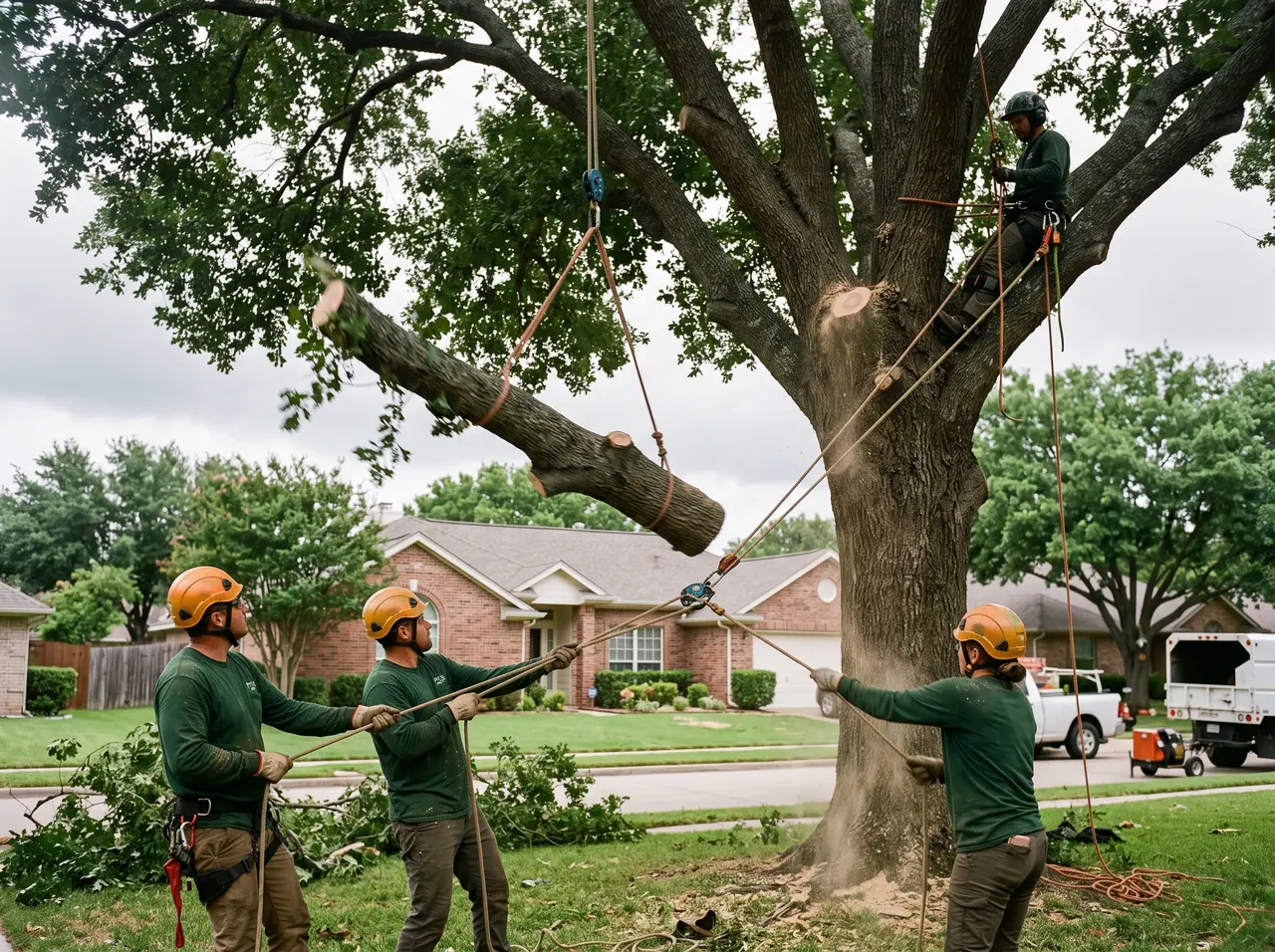
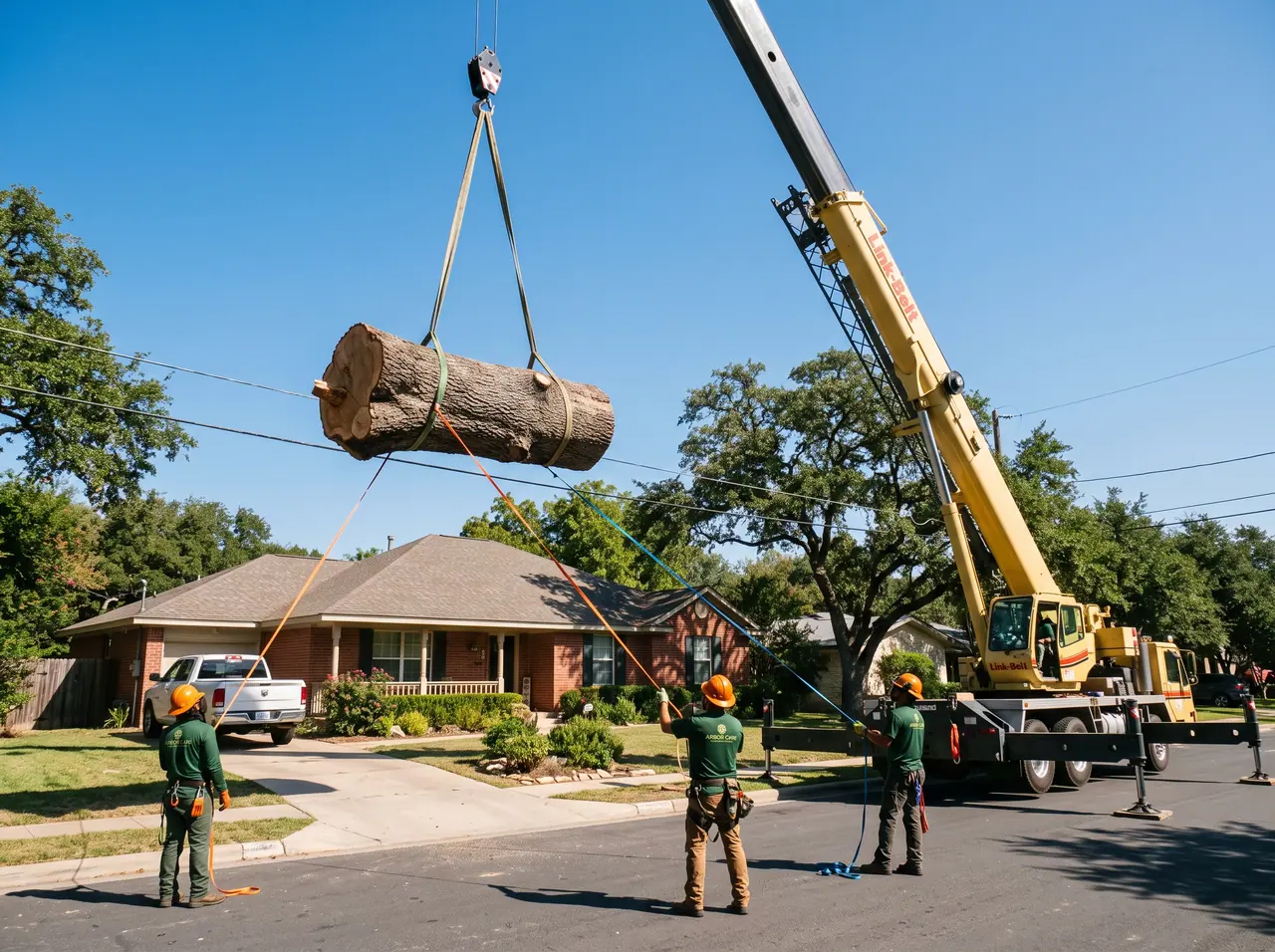
No room to fell and no crane access down the side return, so the tree came down in rigged sections lowered on a friction device. The climber walked the homeowner through the rigging plan from the ground before going up, which is standard: anyone whose house is under the drop zone is entitled to understand it.
Close quarters is a rigging problem, not a felling problem.
Tree Trimming & PruningForest Creek, Round RockMay
Homeowner had two quotes to top the tree.
Topping was declined and the reason explained: the flush of weak regrowth it triggers is far more likely to fail than the limb being removed, and the decay pockets left behind never close. The tree was reduced to suitable lateral branches instead, taking roughly 15% of the live crown.
A company that offers to top your tree is telling you something.
Oak Wilt ManagementNorthwest Hills, AustinMay
Three live oaks thinning from the top down.
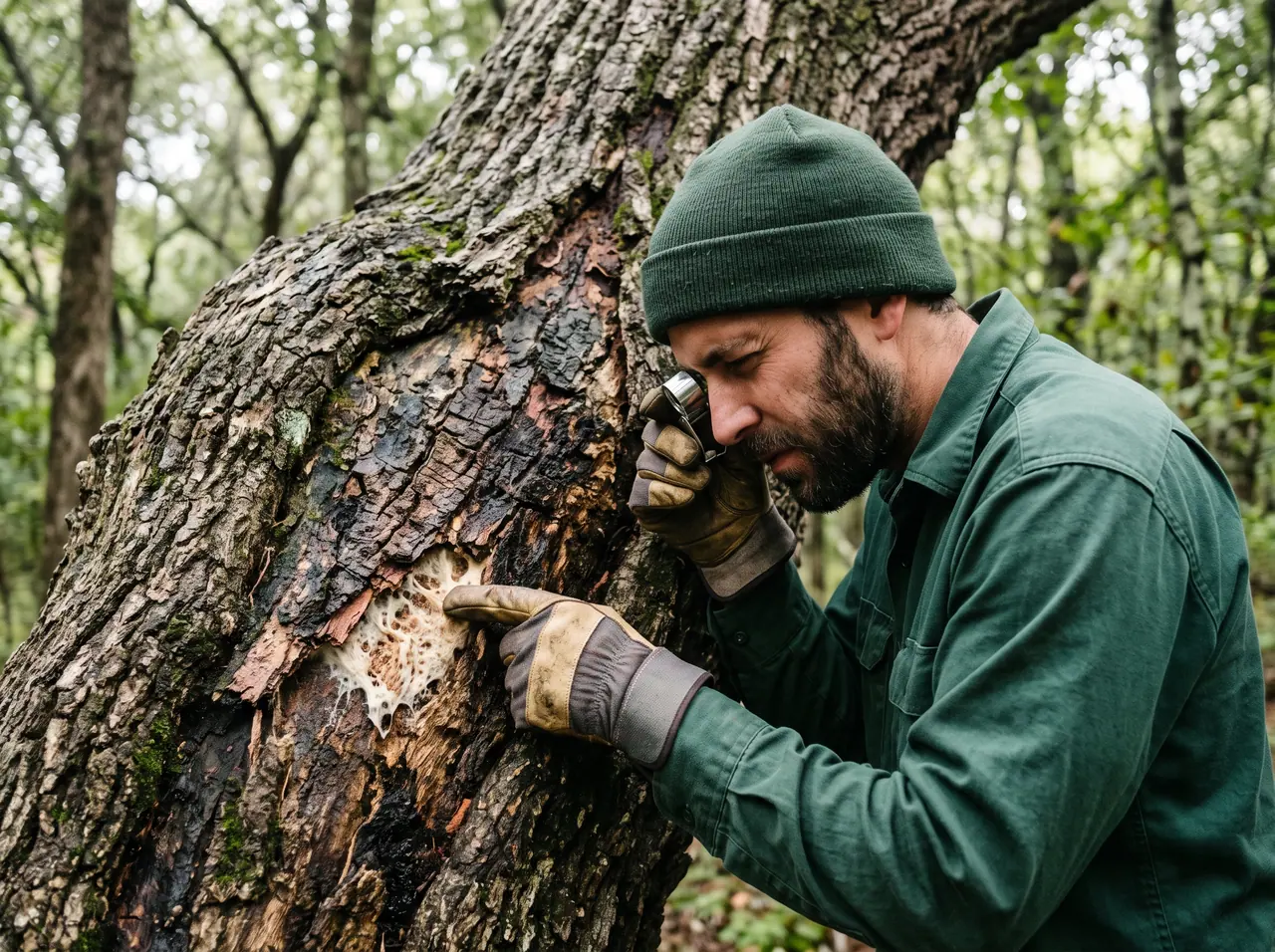
Pattern and veinal necrosis matched oak wilt. A trench was cut to sever the root grafts running toward the healthy stems, and the two unaffected trees were injected. The infected tree was removed outside beetle season and the wood was not kept on site.
Roughly 90% of local spread is underground. Trenching is the treatment.
Storm DamageButtercup Creek, Cedar ParkApril
11pm, limb through a carport roof.
A crew reached the address inside two hours. The limb was cut back to a stable point and the drive cleared overnight so the household could get out in the morning. The rest of the tree was reassessed in daylight rather than in the dark, which is the correct order.
Overnight work makes the hazard safe. Diagnosis waits for light.
Land & Lot ClearingBelterra, Dripping SpringsMarch
Four acres of dense Ashe juniper.
The lot was walked first and every oak worth keeping was flagged before a machine moved. Mulching cleared the juniper and opened the ground layer without hauling loads of green waste off a hill country lot that could use the mulch.
Clearing is a selection job. Flag what stays before you start.
Arborist ConsultingSun City, GeorgetownMarch
A written report was needed for a permit application.
Site inspection, measurements, photographs and a documented risk assessment, formatted for the reviewer who had to read it. The report did not recommend removal, because the inspection did not support removal.
A consulting report you cannot argue with is worth more than a cheap one.
Stump GrindingFalcon Pointe, PflugervilleFebruary
Stump left behind by another contractor, ground flush.
Flush is not finished. It was reground well below grade, the chip spoil was removed rather than raked back into the hole, and the void was backfilled with topsoil so sod could go straight over it.
Ask how deep, and ask what fills the hole afterwards.
Cabling & BracingRough Hollow, LakewayJanuary
Split co-dominant oak, previously quoted for removal.
The union had included bark but no significant decay below it, which makes it a candidate for support rather than removal. A cable system was specified to ANSI A300 Part 3 for the actual geometry of the tree, with a re-inspection interval agreed in writing.
Cabling reduces likelihood of failure. It does not eliminate it.
Tree Trimming & PruningPlum Creek, KyleJanuary
Six young trees, subdivision planting, never pruned.
Structural pruning on trees this age is small cuts with long consequences: remove the competing leader now and the tree carries its own weight for the next fifty years. The crew arrived about an hour outside the window and the office called ahead rather than letting it pass unremarked.
The cheapest structural work you will ever buy is on a young tree.
Commercial & HOAGarlic Creek, BudaDecember
Board wanted to stop reacting to tree failures.
Every tree on the common areas was inventoried with condition notes and mapped, then sorted into a three-year programme by priority. The board now has a document that shows what it knew and what it did about it, which is the question asked after any failure.
An inventory is a liability record as much as a maintenance plan.
Questions
The things people ring up unsure about
If your question is not here, call and ask. We would rather spend five minutes on the phone than have you guess.
How do I find out what my tree work involves?
Book a free on-site visit. Every tree is different enough that an honest answer needs an arborist standing under it: size, access, what sits beneath the canopy and the condition of the wood all change the job completely. An arborist walks the property with you, explains what each tree actually needs, and gives you a fixed written scope before anything is agreed. The visit is free everywhere we work, and there is no obligation attached to it.
What insurance should I ask a tree company for?
Ask for a certificate of insurance sent to you directly by the insurer, not a photocopy handed over by the crew, and check that it names both general liability and workers compensation. Workers compensation is the one people skip: if a climber with no cover is injured on your property, that exposure can find its way to your homeowners policy. Ask every company you get a quote from, including this one.
Do you charge for estimates?
No. On-site estimates are free across our entire service area, and there is no travel charge to Round Rock, Cedar Park, Georgetown, Pflugerville, Leander, Lakeway, Dripping Springs, Kyle or Buda. Formal written arborist reports for permits, insurance or litigation are a separate professional service, quoted after we know what the report has to answer.
When should I not prune my oak trees in Central Texas?
Avoid pruning oaks from February through June. That is when the sap-feeding beetles that transmit oak wilt are most active and most attracted to fresh wounds. July through January is the safe window. If a storm forces an emergency cut in spring, every wound needs pruning paint applied within minutes.
Do I need a permit to remove a tree?
Inside Austin city limits, very likely. The City protects trees 19 inches and larger in diameter, and Heritage trees at 24 inches and above for qualifying species. Williamson and Hays County jurisdictions are generally less restrictive, though Georgetown operates its own ordinance and HOA covenants often apply. We check your specific address and file any permit for you.
How far in advance do I need to book?
Scheduled work is typically booked five to eight business days out, longer in the weeks following a major storm when every crew in the region is committed. Emergency calls are handled 24 hours a day, with crews usually reaching a tree on a structure within two to four hours.
Do you clean up afterwards?
Completely, and it is included in every scope as standard. Brush is chipped and hauled, hard surfaces are blown clean, and the crew leader walks the finished work with you before leaving. If you would rather keep the chips as mulch or the wood as firewood, tell us and we will leave it stacked for you instead.
What areas do you serve?
Greater Austin and the surrounding suburbs: Austin, Round Rock, Cedar Park, Georgetown, Pflugerville, Leander, Lakeway, Dripping Springs, Kyle and Buda, plus Bee Cave, Hutto and Manor. All are inside our standard service area with no travel surcharge.
Have someone stand under it first.
An arborist will walk your property, say plainly what each tree needs, and put the whole scope in writing before anything is agreed. If the answer is that it needs nothing, that is the answer you get.
Both themes are drawn rather than inverted. Light is the canopy at noon, dark is the understory at dusk, and the drifting light in the hero is tuned separately for each.
Mode
The same switch that sits in the header. Emergency mode overrides the colour scheme on purpose — see the note under Palette.
Colour scheme
Four schemes, each measured for text contrast in both light and dark before it was offered here. A scheme that could not pass in both is not in this list.
Emergency mode is frozen against this control. Whatever scheme you pick, a limb on the roof is always signal amber — a warning colour that moves with a brand preference is not a warning colour.
Text size
Switches
Reduce motion starts switched on if your device already asks for it. These are real controls, not a badge: this site claims no formal accessibility conformance, because it has not been audited against one. What it has been is measured — seethe accessibility statement.
What this site keeps
us-themelight, dark or system
us-palettewhich colour scheme you chose
us-modeplanning or emergency
us-a11yyour accessibility switches
us-storagethis decision, so we stop asking
Five keys in this browser's localStorage, and nothing else. No analytics, no advertising, no third-party scripts, no cookies at all. They are functional preferences rather than tracking, but they are still yours to refuse.
Internal machinery. Reachable only at ?studio=1 and never shown to a visitor.
Identity
Colour
Type pairing
This site keeps five preference keys in your browser — theme, colour scheme, mode and your accessibility switches. No cookies, no analytics, no third parties.